
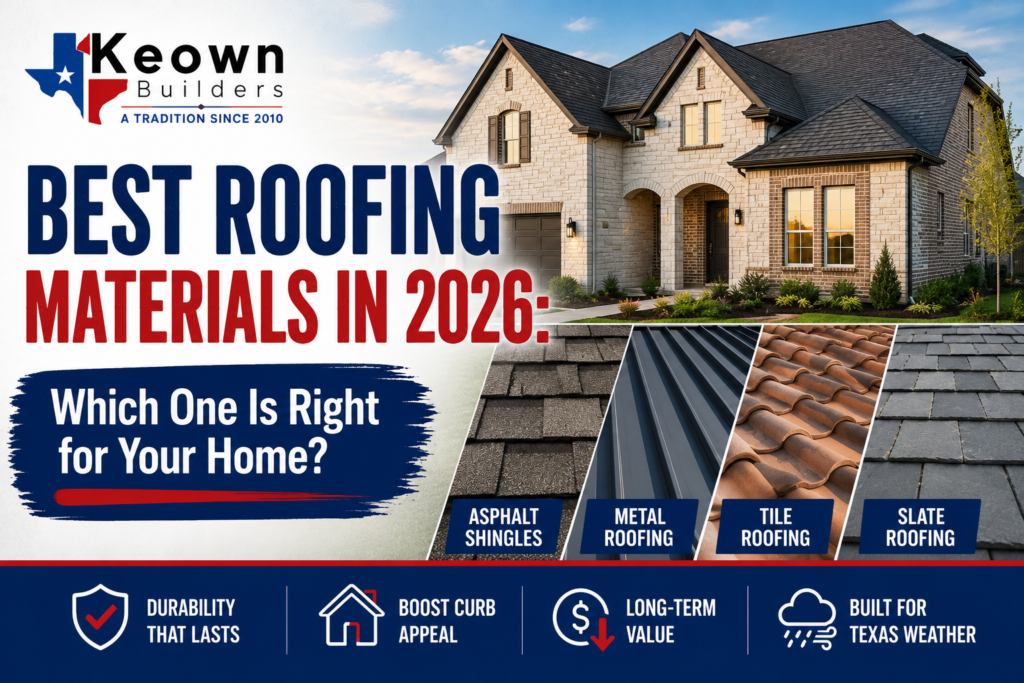
Every homeowner eventually faces a roofing decision, and the stakes are high. Your roof protects your family, your investment, and everything inside your home. But when it comes time to choose, the question isn’t which material is objectively “best.” Instead, it’s about which material works best for your home, budget, and climate.
The best roofing materials in 2026:which one is right for your home depends on three core factors: upfront cost, how long you plan to stay, and your local climate. In North Texas, where we battle intense summer heat, hailstorms, and high winds, your choice matters even more. This guide walks you through every major roofing material option so you can decide with confidence.
A Quick Comparison of the Best Roofing Materials in 2026: Which One Is Right for Your Home?
Before diving into details, here’s a side-by-side look at how the top roofing materials stack up:
| Material | Lifespan | Relative Cost | Best For | Texas Suitability |
| Asphalt Shingles | 15–30 yrs | $ | Most homeowners | ⭐⭐⭐ |
| Metal Roofing | 40–70+ yrs | $$$ | Long-term investment | ⭐⭐⭐⭐⭐ |
| Clay & Concrete Tile | 50–100 yrs | $$$ | Warm/Mediterranean climates | ⭐⭐⭐⭐ |
| Slate | 75–100+ yrs | $$$$ | Premium/luxury homes | ⭐⭐⭐ |
| Synthetic Composite | 40–50 yrs | $$ | Impact resistance, lightweight | ⭐⭐⭐⭐ |
| Wood Shakes | 20–40 yrs | $$ | Rustic aesthetic | ⭐⭐ |
This table summarizes the tradeoffs. For independent performance testing and ratings, see roofing material ratings and performance data from Consumer Reports.
Breaking Down Each Material and which one is best for you?
Let’s examine each roofing type in detail so you understand exactly what you’re choosing.
1. Asphalt Shingles: Best Overall Value
Asphalt shingles dominate residential roofing across America, and for good reason. They’re affordable, widely available, and easy to install. You’ll find two types: basic 3-tab shingles and premium architectural (dimensional) shingles. Architectural shingles outperform 3-tab in both lifespan (20–30 years vs. 15–20) and appearance.
Pros: Low cost, quick installation, wide color range, familiar to contractors everywhere
Cons: Shorter lifespan than premium materials; absorbs heat in summer (a real consideration in North Texas)
Takeaway: Asphalt shingles are the most common choice in North Texas, but they’re susceptible to hail granule loss during storms. Our residential roofing services in Frisco, TX, include architectural shingle installations at every budget level.
2. Metal Roofing: Best Long-Term Investment
Metal roofing has exploded in popularity over the past decade. Standing seam panels or stone-coated steel deliver durability that rivals premium materials at a fraction of slate’s cost. You’ll see metal on everything from farmhouses to modern homes across North Texas.
Pros: Outstanding durability (40–70+ years), reflects heat (huge Texas benefit), low maintenance, and exceptional hail resistance
Cons: Higher upfront cost (2–3× asphalt), can be noisy without proper insulation, steeper learning curve for contractors
Takeaway: Metal roofing is ideal for North Texas heat and storms. The reflective surface keeps your attic cooler, reducing air conditioning costs. Hail and high winds bounce off without damaging the panels.
3. Clay & Concrete Tile: Best for Warm Climates
Tile roofing screams Southwest aesthetics, think Spanish tile homes and Mediterranean villas. Clay tile is iconic in South Texas and Florida. Concrete tile offers similar durability at a lower cost. Both materials last 50–100+ years.
Pros: Fire, rot, and insect resistant, exceptional longevity, stunning curb appeal
Cons: Heavy (may require structural reinforcement), brittle underfoot, specialized installation required
Takeaway: Tile works well in South Texas but is less common in North Texas. If your home’s architecture suits it, specialty contractors can install it, though labor costs run higher.
4. Slate Roofing: Best Premium Choice
Slate is nature’s masterpiece. It’s widely regarded as the gold standard, literally lasting over a century. You’ll see slate on high-end estates and historic homes built to last generations.
Pros: Ultimate longevity (75–100+ years), stunning natural beauty, eco-friendly, zero maintenance
Cons: Very expensive, extremely heavy, requires specialist installers, rare in residential North Texas
Takeaway: Rarely used in North Texas due to weight and cost. Slate suits custom luxury builds where budget allows for premium materials and structural reinforcement.
5. Synthetic Composite Roofing: Best Impact Resistance
Synthetic composite is made from recycled plastics and rubber, engineered to mimic slate, tile, or wood shakes. It’s lightweight, durable, and increasingly popular with homeowners who want a premium look without slate’s weight or cost.
Pros: Lightweight, highly impact-resistant, mimics premium materials, low maintenance, good for hail-prone areas
Cons: Premium brands carry higher upfront costs, and fewer contractors are experienced with installation
Takeaway: Synthetic composite is gaining traction across North Texas for its exceptional hail resistance. If you’ve experienced storm damage before, this material offers peace of mind.
6. Wood Shakes & Shingles: Best for Natural Aesthetic
Cedar shakes deliver a rustic, natural look that can’t be faked. They age gracefully and provide decent insulation. However, they require significant maintenance and aren’t ideal for North Texas’s climate.
Pros: Attractive natural appearance, good insulation properties, rustic charm
Cons: High maintenance, vulnerable to rot, insects, and fire without frequent treatment
Takeaway: Not recommended for North Texas without treated, fire-rated materials. Our climate’s humidity and occasional dry spells create conditions where wood deteriorates faster than in other regions.
How to Choose the Right Roofing Material for Your Home
Choosing the best roofing materials depends on the following situations: your budget and the end goal you want to achieve.
| Your Situation | Budget | Best Material | Why |
| Tight budget, urgent need | $ | Asphalt Shingles | Lowest cost, reliable, quick install |
| Replacing soon, staying 5 years | $ | Architectural Asphalt | Good ROI for short-term ownership |
| Staying 15+ years, want savings | $$$ | Metal Roofing | Pays for itself through energy savings + minimal maintenance |
| Hail damage concerns | $$ | Synthetic Composite | Superior impact resistance, mid-range cost |
| Hail resistance + energy savings | $$$ | Metal Roofing | Best all-around for the North Texas climate |
| Premium curb appeal | $$$$ | Slate or Clay Tile | Luxury aesthetics, 75–100+ year lifespan |
| Want the lowest maintenance | $$$ | Metal Roofing | Minimal repairs, long-term hassle-free |
| Maximum lifespan | $$$$ | Slate | 75–100+ years, generational investment |
| Best value | $$$ | Metal Roofing | 40–70+ years, energy efficient, low maintenance |
Still unsure? Schedule a free inspection with Keown Builders, and we’ll assess your home and recommend the best material for your roof in Taxes.
Frequently Asked Questions
What is the most durable roofing material?
Slate is the most durable roofing material available, with a lifespan of 75–100+ years. For practical long-term performance in most homes, metal roofing offers 40–70+ years with lower cost, weight, and maintenance than slate.
What roofing material is best for Texas weather?
Metal roofing performs best in Texas due to its heat reflection, hail resistance, and durability in high winds. Architectural asphalt shingles remain the most popular North Texas choice for balancing cost and storm resilience. Synthetic composite is also excellent for impact resistance if hail is a top concern. If you suspect your current roof has already taken damage, read our guide on signs of hail damage on a roof.
How long does an asphalt shingle roof last?
Asphalt shingles typically last 15–30 years, depending on product quality and local climate. Architectural shingles outlast basic 3-tab shingles and perform better in areas with severe weather like North Texas.
Is metal roofing worth the extra cost?
For homeowners planning to stay long-term, yes. Metal roofing costs 2–3 times more than asphalt upfront, but can pay for itself through energy savings, minimal maintenance, and a lifespan exceeding 50 years. In Texas, the heat reflection alone can reduce cooling costs by 10–20%.
What is the cheapest roofing material that still lasts?
Asphalt shingles remain the most affordable and reliable option. For a budget-friendly material with a longer lifespan, synthetic composite roofing is worth considering as a mid-range alternative.
Ready to Choose? We’ll Help You Get It Right.
Choosing the best roofing materials in 2026: which one is right for your home comes down to your specific situation, not one-size-fits-all advice.
If your current roof has storm damage, explore our roof restoration services before committing to a full replacement. Sometimes repair is the right move. Sometimes replacement makes sense. We’ll give you an honest assessment either way.
Get Your Free Roof Inspection Today, no obligation, no sales pitch. We’ll assess your roof, explain your material options, and answer all your questions. Then you decide what’s right for your home and your budget.