
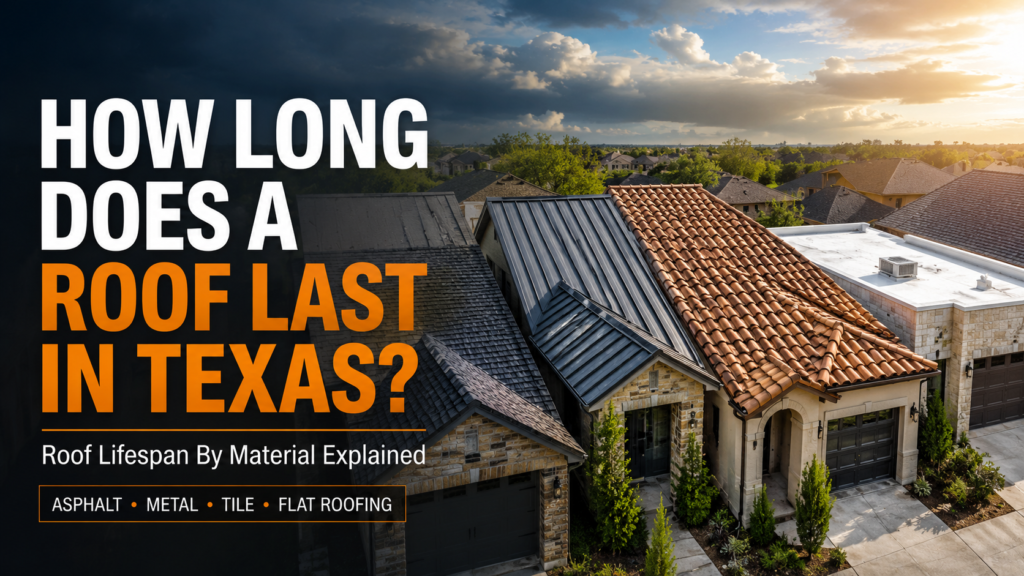
A roof rated for 30 years in Denver might give out after 15 years in Dallas. That gap is not a marketing trick; it is the direct result of what Texas weather does to roofing materials year after year. If you are planning a replacement, budgeting for repairs, or just bought a home and want to know where you stand, this guide breaks down realistic lifespans by material, adjusted for Texas climate conditions, plus the insurance and warranty factors most homeowners never think about until it is too late. Let’s discuss how long does a roof last in Texas and what to expect while replacing your roof.
Why Texas Is One of the Harshest Roofing Environments in the Country
Texas puts roofs through a punishment that most other states simply do not. Three forces are constantly working against your roof:
- UV intensity and heat: With more than 300 sunny days per year and summer temperatures regularly exceeding 105°F, Texas roofs absorb and radiate heat at a level that accelerates the breakdown of virtually every roofing material. Attic temperatures in poorly ventilated homes can hit 160°F, hot enough to warp decking and bake shingles from the underside.
- Extreme thermal cycling: Temperatures that swing from a 20°F January night to a 110°F August afternoon cause roofing materials to expand and contract repeatedly. Over the years, this cycling creates micro-cracks that grow into leaks.
- Hail Alley: The corridor running from North Texas through the Dallas–Fort Worth metroplex down to San Antonio sits in one of the most hail-prone regions in the United States, according to NOAA’s billion-dollar disaster records for Texas. It is not a question of if your roof will take a hit; it is when.
And Texas is not one climate. The Gulf Coast (Houston, Corpus Christi) adds persistent humidity and hurricane risk. West Texas (Lubbock, Midland) delivers dry desert heat and dust storms. The Hill Country faces elevated wildfire ember risk. Your location within Texas matters as much as the material you choose.
The bottom line: most roofing materials last 25–40% less in Texas than manufacturer warranties suggest.
Roof Lifespan by Material in Texas
| Material | Texas Lifespan | National Average | Best Texas Region | Hail Rating | Approx. Cost/sq ft |
| 3-Tab Asphalt | 10–15 yrs | 20–25 yrs | None ideal | Poor | $3–$5 |
| Architectural Shingles | 15–20 yrs | 20–30 yrs | Statewide | Good (Class IV) | $4–$7 |
| Metal (Standing Seam) | 40–70 yrs | 50–75 yrs | All regions | Excellent | $10–$16 |
| Clay / Concrete Tile | 50–75 yrs | 50–100 yrs | South & Central TX | Good | $10–$18 |
| Wood Shake (Cedar) | 20–30 yrs | 20–30 yrs | East TX (with upkeep) | Poor | $6–$9 |
| Slate | 75–100+ yrs | 75–150 yrs | Anywhere (budget permitting) | Excellent | $20–$30 |
- 3-Tab Asphalt Shingles:Most common but worst performer. 60–70 mph wind limit; rapid granule loss under Texas UV. Expect 10–15 years.
- Architectural Shingles: Handles up to 130 mph winds; Class IV impact-resistant versions available. Can lower your insurance premium.
- Metal (Standing Seam): Best long-term value. Reflects heat, reduces cooling costs. Watch for cosmetic hail damage (often uninsured) and prioritize quality installation.
- Clay & Concrete Tile: Ideal for South and Central Texas heat. 125+ mph wind-rated; fire and rot resistant. Requires strong structural support due to weight.
- Wood Shake (Cedar): High maintenance in humid East Texas; prone to moss, rot, and mildew. Restricted in some wildfire-risk counties, check local codes first.
- Slate: Most durable material available; can outlast the home itself. Heaviest and most expensive option; rare in Texas but unmatched in longevity.
5 Factors That Shorten (or Extend) Your Texas Roof’s Life
1. Attic ventilation: A poorly ventilated attic traps heat and bakes shingles from underneath, cutting years off their lifespan. Keep ridge vents and soffit vents unobstructed, especially after insulation upgrades.
2. Installation quality: Improper flashing around chimneys, skylights, and valleys is the leading cause of premature roof failure in Texas. Always hire licensed contractors with documented local experience.
3. Post-storm inspections: Hail damage is often invisible at ground level, small impact bruises quietly compromise weatherproofing until water reaches your decking months later. Have a professional inspect your roof after every significant storm, especially March through June.
4. Roof color: Dark shingles can run 40–50°F hotter than light-colored or cool-roof materials on a Texas summer afternoon. That temperature difference directly accelerates material breakdown and drives up your AC bills.
5. Tree coverage: Overhanging limbs deposit debris that traps moisture and, in humid East Texas, creates conditions for moss growth that lifts shingles over time. Trim branches back and clear your gutters regularly.
Texas Homeowners Insurance and Your Roof’s Age
As the Texas Department of Insurance confirms, many policies reduce coverage based on your roof’s age and materials, often shifting from full replacement cost to actual cash value as the roof gets older. Policies range from replacement cost value (RCV) to actual cash value (ACV), meaning depreciation is factored in, and a hail claim on a 20-year-old roof may cover only a fraction of your replacement cost.
Upgrading to Class IV impact-resistant shingles can counter this, earning 20–30% premium discounts with major insurers like State Farm, Farmers, and Allstate. If your roof is approaching 10 years, review your policy now, knowing whether you’re on RCV or ACV coverage, and acting before a storm can save thousands.
Signs Your Texas Roof Needs Replacement, Not Just Repair
Not every roofing issue requires a full replacement, but these signals suggest you are past the repair threshold:
- Granule loss in gutters. If your gutters are filling with grit after rain, your asphalt shingles are losing their UV protection. This is a late-stage warning sign.
- Hail bruising. Shine a flashlight across your shingles at a low angle after a hail event. Soft, circular impressions indicate impact damage that compromises the shingle’s integrity even without visible cracking.
- Rising energy bills. A roof failing in Texas heat loses its insulating and reflective properties. A sudden spike in cooling costs is often a roofing issue in disguise.
- Water stains on ceilings or in the attic. Active moisture intrusion means the roof deck may already be compromised, often a point of no return for repair.
The 30% rule: if the estimated repair cost exceeds 30% of full replacement cost, and your roof is 15 or more years old, replacement is almost always the smarter financial decision.
How to Get the Most Years Out of Your Texas Roof
- Inspect twice a year: March (pre-hail season) and October (post-summer UV).
- Clear gutters at least twice annually and after major storms.
- Photo-document storm damage before any repairs or insurance claims.
- Know your warranties: manufacturer (materials), workmanship (contractor), and system (full assembly via GAF/Owens Corning certified installers, the most comprehensive).
- Consider a cool-roof coating on older metal or flat roofs; it can drop attic temps by 20–30°F and extend surface life.
Ready to Know Where Your Roof Stands?
Every Texas roof ages differently depending on material, location, and maintenance history. The best way to know exactly what you are working with, and whether you are heading toward a repair or a full replacement, is a professional inspection by someone who understands the local climate.Keown Builders serves Texas homeowners with honest, expert roof assessments and quality installations built to handle everything the Lone Star State throws at them. From residential roofing to commercial property buildings, our expert builders build everything. Whether you are choosing a new material, dealing with storm damage, or just want a clear picture of your roof’s remaining life, the team at Keown Builders is ready to help.