
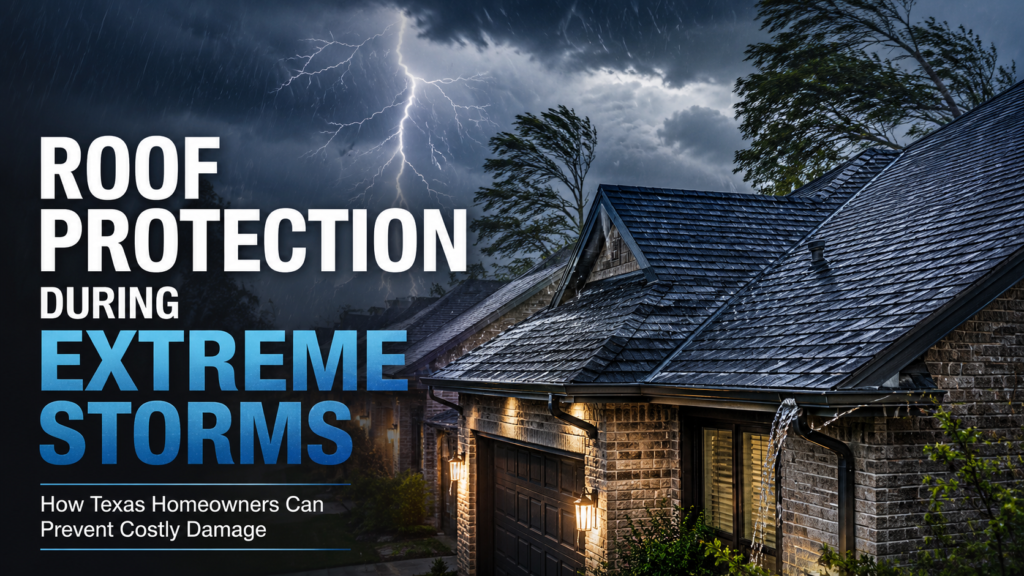
In Texas, storms don’t politely announce themselves. One minute the sky is clear, and the next, heavy rain is pounding your roof while winds shake the entire house. For homeowners across the state, extreme weather has become part of life. From powerful hailstorms in North Texas to hurricane-force winds near the Gulf Coast, your roof takes the first hit every single time.
Most homeowners never think much about their roof until there’s a leak dripping into the living room or shingles scattered across the yard after a storm. By then, the damage is already done.
The truth is, protecting your roof before severe weather arrives can save you thousands of dollars in repairs and help prevent long-term structural problems. A strong, properly maintained roof doesn’t just protect shingles and decking — it protects your family, your belongings, and your peace of mind.
Why Storm Protection Matters More Than Ever
Texas weather has become increasingly unpredictable over the years. Stronger storms, larger hail, flash flooding, and high-speed winds are causing major roofing damage across residential neighborhoods every season.
Even newer roofs are vulnerable if they haven’t been properly maintained or installed correctly. Many homeowners assume their roof is fine simply because there are no visible leaks inside the home. Unfortunately, roofing damage often starts small and hidden.
A lifted shingle, cracked flashing, or clogged gutter may not seem serious at first. But during an extreme storm, those weak points quickly become entryways for water and wind.
Once moisture gets underneath the roofing system, problems spread fast.
The Most Common Ways Storms Damage Roofs
Different storms create different types of roofing problems. Understanding how weather impacts your roof helps homeowners prepare more effectively.
High Winds
Strong winds can loosen shingles, tear away flashing, and even pull entire sections of roofing materials from the home. Once wind gets underneath a shingle, it can rapidly peel back surrounding areas.
In severe storms, flying debris also becomes a major threat. Tree branches, fencing materials, and outdoor furniture can strike the roof with enough force to puncture the surface.
Hail Damage
Texas is known for aggressive hailstorms, especially in areas like Frisco, Plano, McKinney, Denton, and surrounding North Texas communities.
Hail can:
- Crack shingles
- Knock off protective granules
- Dent metal roofing
- Damage vents and flashing
- Shorten roof lifespan
Sometimes hail damage is obvious. Other times, it’s subtle and only visible during a professional inspection.
Heavy Rainfall
Rain itself may not destroy a healthy roof, but it exposes existing vulnerabilities quickly. Water finds the smallest openings and slowly works its way underneath roofing materials.
Leaks commonly form around:
- Chimneys
- Roof valleys
- Skylights
- Pipe penetrations
- Damaged flashing
If drainage systems are clogged, standing water can also increase pressure on the roof structure.
Signs Your Roof May Already Be Vulnerable
Many homeowners unknowingly enter storm season with roofing problems already developing. Catching early warning signs can prevent major damage later.
Here are some common indicators your roof may need attention:
Missing or Curling Shingles
Shingles that appear loose, cracked, or curled are more likely to fail during high winds.
Granules in Gutters
If you notice black or sandy particles collecting in gutters, your shingles may be deteriorating.
Water Stains Indoors
Brown ceiling stains or peeling paint often point to hidden roof leaks.
Sagging Areas
A sagging roofline may indicate trapped moisture or weakened decking beneath the shingles.
Mold or Mildew Smells
Musty odors in the attic can signal moisture buildup caused by roofing leaks or poor ventilation.
How Homeowners Can Protect Their Roof Before a Storm
The best defense against extreme weather is preparation. A few preventative steps now can help homeowners avoid expensive repairs later.
Schedule a Professional Roof Inspection
One of the smartest things homeowners can do is have their roof professionally inspected before storm season.
Experienced roofing contractors know exactly what to look for and can spot problems the average homeowner may miss.
A proper inspection typically includes:
- Shingle condition evaluation
- Flashing inspection
- Leak detection
- Structural assessment
- Gutter drainage review
- Ventilation checks
Even roofs that look fine from the ground may have hidden storm vulnerabilities.
Repair Small Problems Early
Many roofing disasters begin as small maintenance issues.
A minor crack in flashing or a few missing shingles may seem harmless during dry weather, but storms turn small weaknesses into major structural damage.
Quick repairs can prevent:
- Interior water damage
- Mold growth
- Deck rot
- Insulation damage
- Ceiling collapse
Preventative maintenance is always cheaper than emergency roof replacement.
Clean Gutters and Drainage Systems
Gutters play a huge role in storm protection. When gutters clog with leaves, dirt, or debris, rainwater backs up onto the roof.
This standing water can seep underneath shingles and damage the roof decking over time.
Homeowners should clean gutters regularly, especially before heavy storm seasons.
Trim Nearby Trees
Overhanging branches become dangerous during severe weather. Strong winds can snap limbs and send them crashing onto the roof.
Trimming nearby trees reduces the risk of punctures, broken shingles, and structural damage.
Choosing Better Roofing Materials for Storm Protection
Not all roofing systems perform equally during extreme weather. In storm-prone areas, stronger materials can make a major difference.
Impact-Resistant Shingles
Class 4 impact-resistant shingles are designed to handle hail more effectively than standard asphalt shingles.
These shingles are built with reinforced materials that absorb impacts better and reduce cracking.
Metal Roofing
Metal roofing has become increasingly popular across Texas because of its durability and wind resistance.
Benefits include:
- Longer lifespan
- Better hail resistance
- High wind protection
- Energy efficiency
- Lower maintenance needs
While metal roofing costs more upfront, many homeowners view it as a long-term investment.
Waterproof Underlayment Systems
Modern underlayment materials add an extra moisture barrier beneath shingles. This additional protection can help reduce leaks if shingles become damaged during storms.
The Importance of Roof Ventilation
Roof protection isn’t only about shingles and materials. Ventilation plays a major role in maintaining a healthy roofing system.
Poor attic ventilation traps heat and moisture inside the home, which weakens roofing materials over time.
Proper ventilation helps:
- Reduce attic temperatures
- Prevent moisture buildup
- Extend roof lifespan
- Improve energy efficiency
- Lower the risk of mold growth
During extreme weather, a properly ventilated roof is often more stable and resilient.
What To Do During an Extreme Storm
When severe weather is approaching, safety should always come first. Homeowners should avoid climbing onto the roof or attempting temporary repairs during active storms.
Instead:
- Secure loose outdoor furniture
- Move vehicles into covered areas
- Check attic spaces for active leaks
- Keep emergency tarps available if needed afterward
- Monitor ceilings for water intrusion
If leaks develop during the storm, placing buckets and towels inside can help minimize interior damage until repairs are possible.
Why Post-Storm Inspections Matter
One of the biggest mistakes homeowners make is assuming their roof survived the storm simply because no immediate leak appears.
Storm damage is often hidden.
Hail bruising, lifted shingles, and weakened flashing may not show visible symptoms until weeks or months later.
After major storms, homeowners should schedule a professional roof inspection even if everything appears normal from the ground.
Early detection can prevent small storm damage from becoming a much larger insurance claim later.
Insurance Claims and Roof Damage
Navigating roof insurance claims after a storm can feel overwhelming for many homeowners.
The process becomes easier when damage is documented properly.
Helpful steps include:
- Taking photos of visible damage
- Saving repair receipts
- Recording storm dates
- Documenting interior leaks
- Scheduling contractor inspections quickly
Reputable roofing contractors often assist homeowners throughout the insurance process by providing inspection reports and damage assessments.
Avoiding Storm Chasing Roofing Companies
After severe storms, neighborhoods often become flooded with out-of-town roofing companies offering quick repairs.
While some may be legitimate, many storm-chasing contractors disappear after the work is complete, leaving homeowners with poor workmanship and warranty issues.
Homeowners should always choose contractors who are:
- Licensed and insured
- Locally established
- Experienced with storm restoration
- Willing to provide references
- Transparent with written estimates
A trustworthy local roofing company will stand behind their work long after the storm passes.
Final Thoughts
Extreme storms are unavoidable in Texas, but major roofing damage doesn’t always have to be.
A well-maintained roof can withstand severe weather far better than a neglected one. Routine inspections, preventative maintenance, stronger roofing materials, and quick repairs all help protect your home when storms hit hard.
Your roof does more than cover your house. It protects everything underneath it — your family, your memories, and your investment.
Waiting until a storm exposes roofing problems is always the expensive route. Taking action before severe weather arrives gives homeowners the best chance to avoid costly repairs and long-term structural damage.
When it comes to roof protection during extreme storms, preparation is everything.